The Security Brief
NDAA- and TAA-Compliant Security Cameras: What They Mean for Your Business
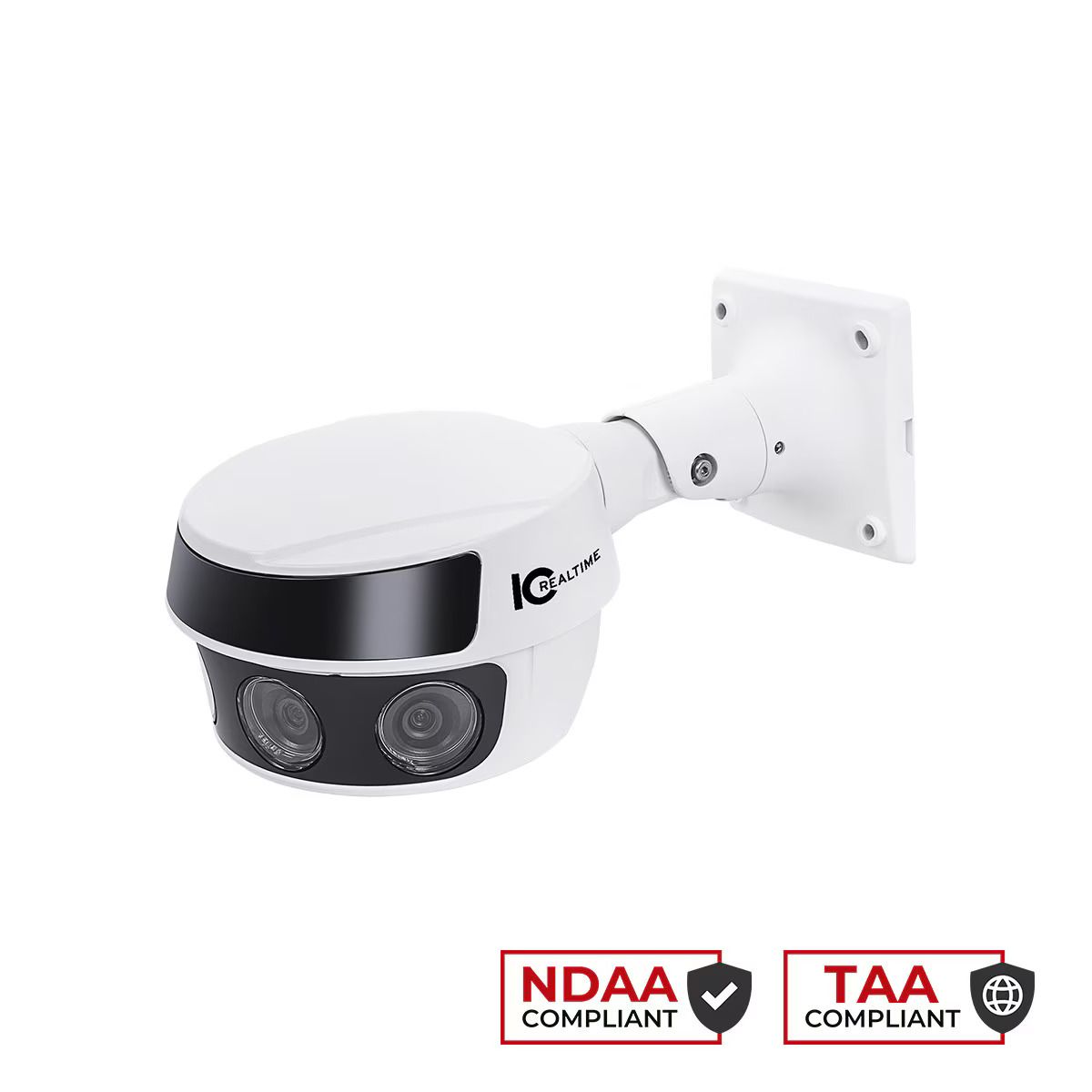
All Secure now offers NDAA- and TAA-compliant security camera systems. Learn what these standards mean and how compliant equipment can protect your organization’s future purchasing eligibility.
Security cameras are no longer just physical security devices. Modern surveillance systems connect to business networks, store sensitive video, support remote access, and may communicate with cloud-based platforms. Because of this, organizations are paying closer attention to where their security equipment is manufactured, who produces its components, and how it fits within federal purchasing requirements.
All Secure now offers NDAA- and TAA-compliant camera options for businesses, government facilities, contractors, schools, healthcare organizations, and other customers that require a more carefully documented security supply chain.
What Does NDAA Compliance Mean?
NDAA compliance commonly refers to Section 889 of the National Defense Authorization Act for Fiscal Year 2019. This section restricts federal agencies from purchasing or using certain telecommunications and video-surveillance equipment as a substantial or essential component of a system.
The Federal Acquisition Regulation specifically identifies covered equipment produced by Huawei, ZTE, Hytera, Hikvision, Dahua, and their subsidiaries or affiliates. The restrictions can also affect companies that perform work under federal contracts, even when the equipment is not being used directly for the federal project.
In practical terms, an NDAA-compliant camera system is designed without prohibited equipment or essential components from the covered manufacturers.
For customers, this can provide:
- Greater confidence in the equipment supply chain
- Eligibility for projects that include Section 889 requirements
- Reduced risk of installing equipment that may need to be replaced later
- Better alignment with federal, defense-contractor, and critical-infrastructure specifications
- Clearer product documentation during purchasing and approval processes
NDAA compliance should not be confused with a complete cybersecurity certification. It addresses specific manufacturers, equipment, services, and federal contracting restrictions. Proper network design, firmware management, passwords, remote-access controls, and system maintenance are still essential.
What Does TAA Compliance Mean?
The Trade Agreements Act, commonly called the TAA, focuses primarily on a product’s country of origin.
For applicable federal purchasing programs, including GSA Multiple Award Schedule contracts, products generally must be manufactured or substantially transformed in the United States or another TAA-designated country. China is not currently identified by GSA as a TAA-designated country.
A product may qualify when it is:
- Wholly manufactured in the United States or a designated country; or
- Substantially transformed in the United States or a designated country into a new and different product.
TAA compliance is therefore different from NDAA compliance. A camera could potentially meet the NDAA’s manufacturer restrictions without qualifying as TAA compliant based on its country of origin.
When a project requires both, the selected camera must satisfy both sets of requirements.
Why Should a Private Business Care?
Not every privately owned business is legally required to install NDAA- or TAA-compliant cameras. However, selecting compliant equipment can still be a smart long-term decision.
A business may later pursue federal work, lease space to a government-related organization, become part of a regulated supply chain, or receive funding with specific purchasing conditions. Replacing an entire surveillance system because the original equipment does not meet a new contract requirement can be significantly more expensive than selecting an appropriate platform from the beginning.
Compliant camera systems may be particularly valuable for:
- Federal contractors and subcontractors
- Government and municipal facilities
- Defense-related manufacturers
- Utilities and critical-infrastructure operators
- Schools and educational institutions
- Healthcare facilities
- Warehouses and distribution centers
- Financial institutions
- Organizations pursuing government grants or funded projects
Requirements vary by contract, agency, funding source, and individual product model. Compliance should always be verified through current manufacturer documentation and the applicable purchasing authority.
Compliance Is About More Than the Logo on the Camera
Security equipment is often sold under multiple brand names, and manufacturing locations can change over time. GSA advises contractors to periodically review product origin because manufacturers may change where products are produced.
That is why All Secure evaluates compliance at the product and system level rather than relying only on a brand name.
When designing a compliant surveillance system, we review factors such as:
- Camera manufacturer and model
- Original equipment manufacturer information
- Country of origin
- Network video recorder compatibility
- Firmware and remote-access capabilities
- Required compliance documentation
- Customer or contract specifications
- Future expansion requirements
This approach helps ensure that the cameras, recording equipment, and supporting infrastructure are appropriate for the intended application.
All Secure’s Approach
All Secure designs commercial surveillance systems around each customer’s operational needs, facility layout, risks, and purchasing requirements. Security is not a one-size-fits-all product.
Our new NDAA- and TAA-compliant camera options allow us to support customers who need stronger supply-chain documentation without sacrificing important surveillance capabilities such as:
- High-resolution video
- Night vision and long-range viewing
- License-plate recognition
- Active deterrence
- Video analytics
- Remote viewing
- Scalable recording capacity
- Commercial-grade system management
Our team can evaluate your existing system, identify potentially noncompliant equipment, and design a replacement or expansion plan based on your facility and contractual requirements.
Build a System That Is Ready for the Future
A camera system is a long-term investment. Choosing equipment based only on the lowest initial price can create limitations when your organization grows, applies for government opportunities, or faces new security and supply-chain requirements.
By offering NDAA- and TAA-compliant camera systems, All Secure can provide customers with additional choices, clearer documentation, and a stronger foundation for future projects.
Contact All Secure to discuss a new surveillance system, review an existing installation, or determine whether NDAA- and TAA-compliant equipment is appropriate for your facility.
All Secure LLC
Commercial Security and Low-Voltage Solutions
Richmond and Central Virginia
DCJS License #11-21289
Ready to work with All Secure LLC?
Let's connect! We’re here to help.
Send us a message and we’ll be in touch.
Or give us a call today at 804-365-2919
Agency Contact Form
More Security Insights and Events
Expert Insights